
Saltwater vs. Chlorine Pools: What Front Range Homeowners Should Know
For most Front Range homeowners, saltwater pools are the better long-term fit for Colorado's dry, high-altitude climate, since they require far less day-to-day chemical babysitting even as our thin air and constant evaporation work against water balance. Chlorine pools still make sense for homeowners who want the lowest upfront cost and simpler equipment, and both systems can deliver a clean, well-balanced pool when properly maintained.
Here's what actually separates the two once you factor in Colorado's specific climate, not just generic pool advice written for a humid, sea-level state.
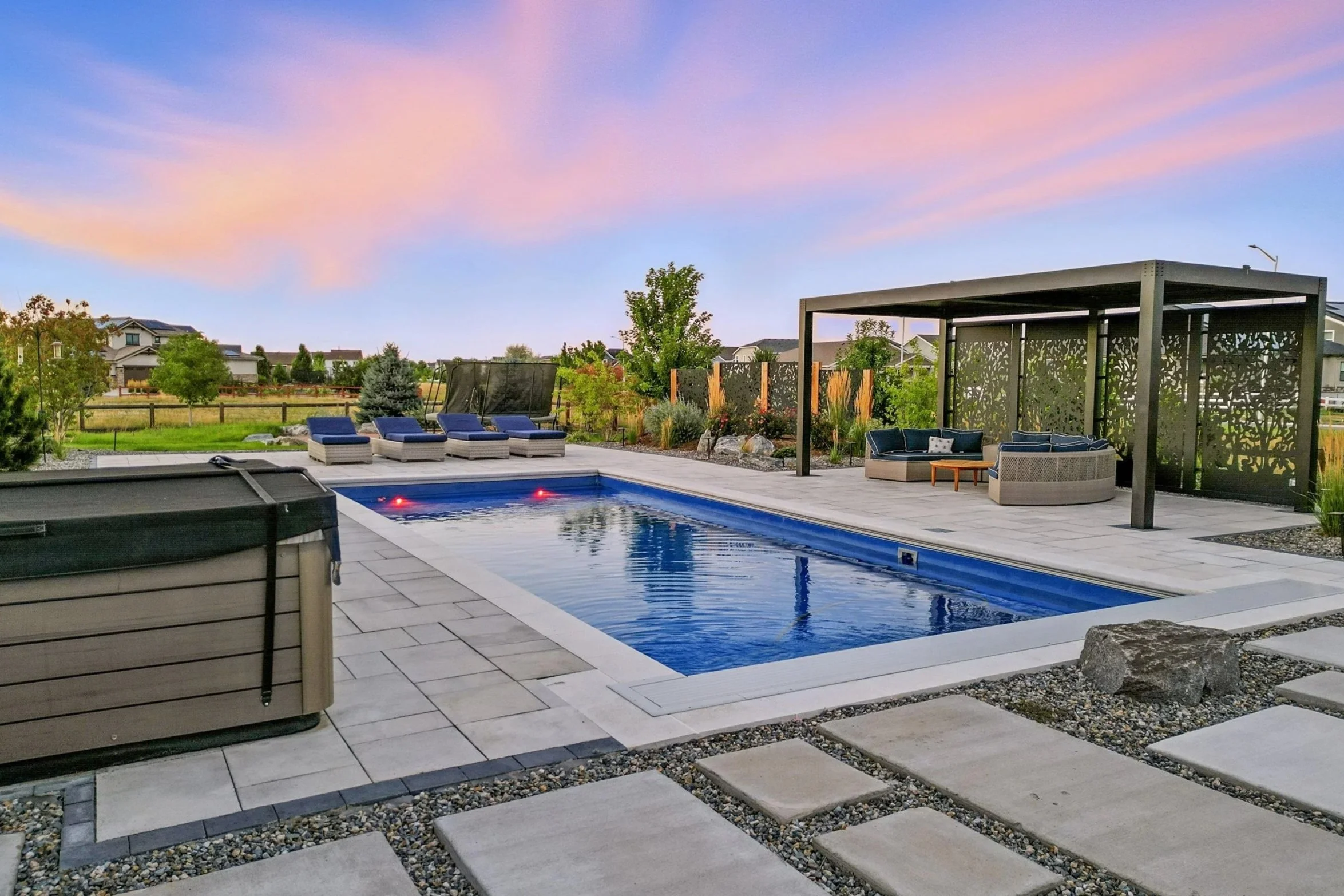
How Colorado's Dry Climate and Altitude Affect Water Chemistry and Evaporation
Colorado's combination of high altitude, low humidity, and near-constant wind accelerates pool water evaporation well beyond what national averages assume. That matters for both pool types, but it affects them differently.
For chlorine pools, faster evaporation means chlorine and stabilizer levels shift more quickly than they would in a humid climate, so testing and rebalancing needs to happen more often, especially during peak summer heat. Altitude also means stronger UV exposure, which breaks down unstabilized chlorine faster, another reason chemical levels drift here more than they would at sea level.
For saltwater pools, evaporation creates a different problem. As water evaporates, it leaves behind dissolved minerals and salt, which means salt concentration can actually climb over time if you're not accounting for it. But every time you top off the pool with fresh water to replace what evaporated, you're also diluting the salt level, so Colorado's higher evaporation rate means saltwater pool owners need to check and adjust salt levels more consistently than owners in milder climates typically do.
The bottom line: Colorado's climate does not let either system run on autopilot. It simply changes what you're watching most closely. Chlorine owners watch chlorine and pH more closely. Saltwater owners watch salt concentration and cell performance more closely.
Maintenance Differences
Chlorine pools require manually adding chlorine (tablets, liquid, or granular shock) on a consistent schedule, plus regular testing for pH, alkalinity, and chlorine levels. There's no special generation equipment beyond a standard pump and filter, which keeps the system mechanically simple, but it also means more hands-on chemical management week to week.
Saltwater pools generate their own chlorine through an electrolytic salt cell, so day-to-day maintenance is lighter. You'll still need to test pH and chlorine levels weekly and check salt concentration monthly, but you're not manually dosing chlorine into the water. The tradeoff is the salt cell itself, which is a wearable part that needs replacing every three to seven years, and salt can be harder on certain pool surfaces, fixtures, and stone coping if they aren't properly sealed.
A quick side-by-side:
Chlorine pools: simpler equipment, more frequent manual chemical dosing, lower tolerance for neglect before water quality drops
Saltwater pools: more equipment (the salt cell and generator), less manual dosing, generally gentler on skin and eyes, but requires periodic cell replacement and closer attention to salt concentration in a high-evaporation climate like ours
Cost Differences Over 5 Years
This is where the decision usually gets made, and the honest answer is that the two systems land closer together over five years than most people expect.
| Chlorine Pool | Saltwater Pool | |
|---|---|---|
| Upfront Equipment | Minimal (standard pump/filter) | $1,500 – $2,500 (salt generator plus installation) |
| Annual Chemical Cost | $300 – $800 per year | Under $100 per year |
| Electricity | Standard pump only | $30 – $50 per year more (generator draw) |
| Cell Replacement | Not applicable | $700 – $1,100 every 3 to 7 years |
| Approximate 5-Year Total | $4,750 – $6,750 | $3,250 – $7,150 |
A few things worth noting about these numbers. If your salt cell lasts closer to the seven-year end of its range, saltwater comes out meaningfully cheaper over five years. If it needs replacing sooner, the two systems can land close to even. Either way, saltwater's savings show up gradually rather than immediately, since the upfront generator cost has to be recovered through lower annual chemical spending first.
There's also a real-world factor beyond pure dollars. Saltwater has become a genuine selling point for Colorado homebuyers, and a pool with a saltwater system is increasingly viewed as a lifestyle upgrade rather than just a mechanical detail, something worth factoring in if resale value matters to your decision.
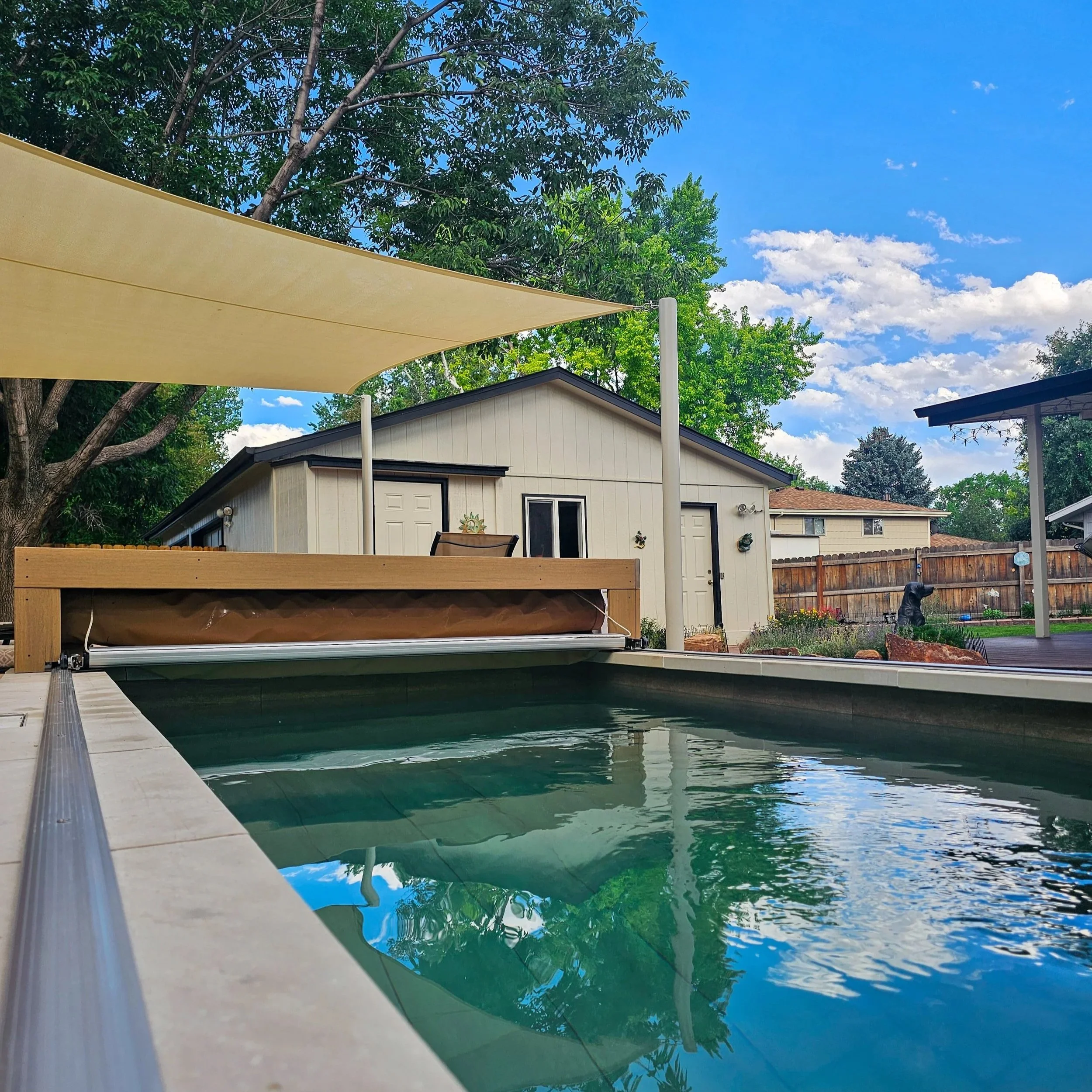
Which Premier Recommends, and Why
For most of our Front Range clients, we recommend saltwater systems, particularly for larger pools, families that use the pool heavily through the season, and anyone sensitive to chlorine's effect on skin, eyes, or swimwear. The lighter day-to-day maintenance and smoother water feel tend to matter more to homeowners once they've lived with the pool for a season or two, and the cost gap over five years is often smaller than people initially assume.
That said, chlorine remains a smart, reliable choice for homeowners prioritizing the lowest upfront cost, a simpler mechanical system with fewer parts to eventually replace, or a smaller pool where the salt generator's upfront cost is harder to justify.
The right answer really depends on your specific pool size, budget, and how you plan to use the space. We walk through both options with every client during the design process so you're choosing based on your actual situation, not a generic recommendation.
If you're planning a new pool install, our custom pool installation services page has more detail, and you can see a completed project on our Longmont pool installation page. Ready to talk specifics? Contact us for a free consultation.
Frequently Asked Questions
-
For most homeowners, yes, saltwater is generally the better fit for Colorado's climate, mainly because it requires less manual chemical dosing at a time when altitude and dryness are already demanding more attention to water balance. Chlorine pools remain a solid choice for lower upfront cost and mechanical simplicity, so "better" depends on your budget and priorities as much as the climate itself.
-
Yes. Stronger UV exposure at altitude breaks down unstabilized chlorine more quickly, and Colorado's low humidity and wind speed up evaporation, which concentrates minerals and shifts salt levels faster than in humid, low-elevation climates. Both effects mean more frequent testing is worth building into your routine here.
-
Most salt cells last three to seven years depending on usage, water balance, and maintenance, with replacement typically costing $700 to $1,100. Keeping salt concentration and pH properly balanced is the best way to get the longer end of that lifespan.
-
Yes, converting is a common and straightforward project that mainly involves adding a salt generator and adjusting your equipment pad, without needing to rebuild the pool itself. It's worth having a professional assess your current equipment first to confirm compatibility.