
Choosing the Right Patio Material for Niwot's Climate
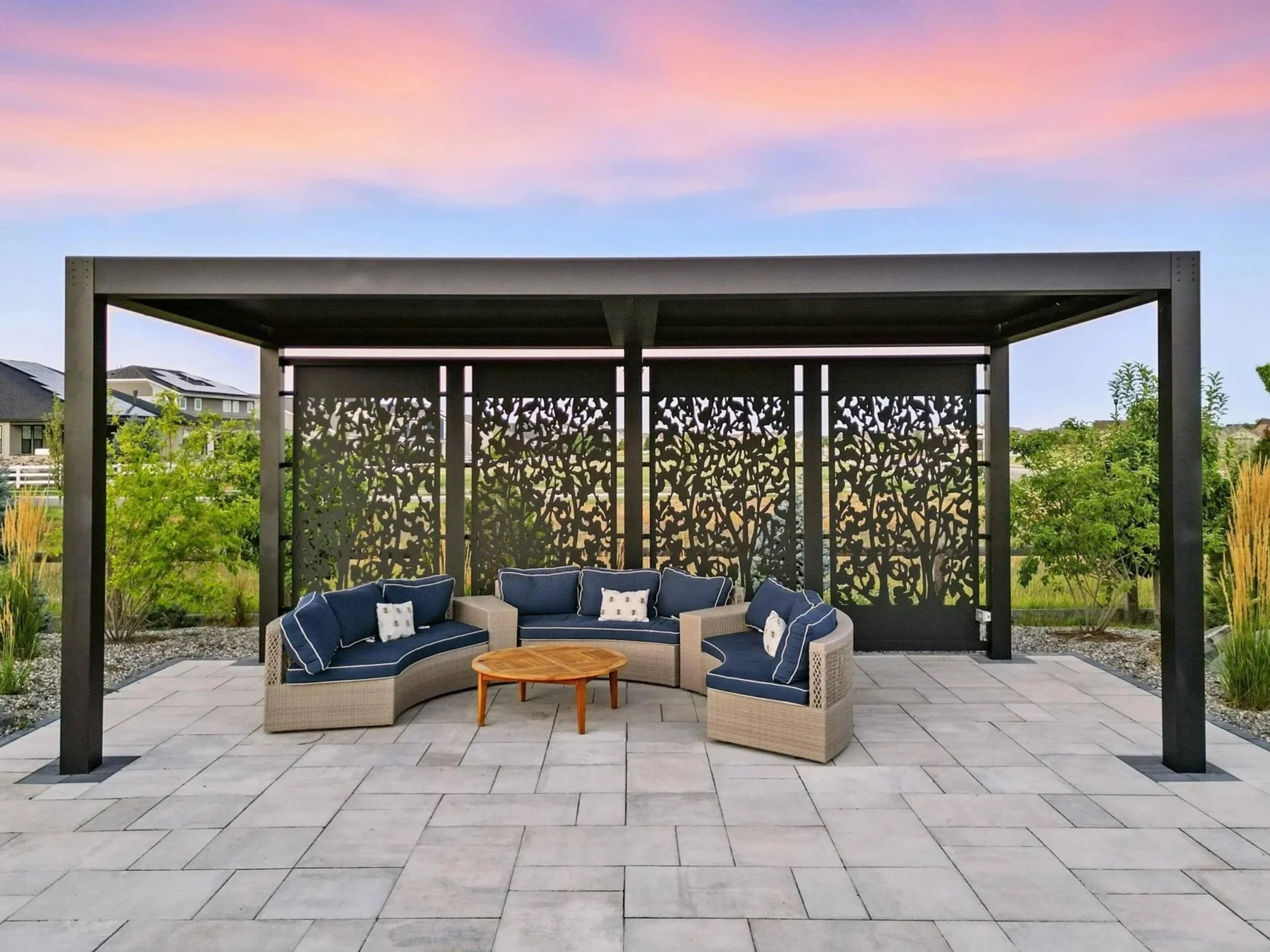
Custom paver patio with shady patio cover under Northern Colorado sunset
Flagstone, pavers, and stamped concrete all look great the day they're installed. The real test is how each one holds up after five, ten, or twenty Colorado winters. For Niwot properties specifically, pavers and natural flagstone generally outperform stamped concrete over time, since both can flex with our freeze/thaw cycles and clay soil movement, while a poured concrete slab cannot.
Here's how to think through the decision for your property.
Freeze/Thaw Performance: Flagstone vs. Pavers vs. Stamped Concrete
The Front Range sees roughly 150 freeze/thaw cycles a year. Every time moisture gets into a material and freezes, it expands, and that expansion has to go somewhere. This is the single biggest factor separating these three materials.
Stamped concrete is poured as one continuous slab. It looks fantastic on day one, but a rigid slab can't flex when the ground beneath it shifts. Cracking isn't a matter of if, it's a matter of when. Steel reinforcement and expansion joints help slow the process, but they don't prevent it, which is why most contractors won't offer a long-term warranty on stamped concrete installs.
Pavers are individual units set on a compacted aggregate base with sand bedding. Because each paver can move independently, the whole system flexes with ground movement instead of cracking. This is a real practical advantage in Niwot, where clay soil movement is common. If a single paver ever does crack or settle, it can be pulled and replaced without touching the rest of the patio, something that's nearly impossible to do invisibly with a poured slab.
Flagstone, when properly set, offers the same flexibility advantage as pavers. Dry-laid or sand-set flagstone allows individual stones to shift slightly with the ground rather than cracking. The key variable is stone selection: some sandstones are porous enough to absorb water readily, which makes them more vulnerable to freeze damage. Choosing a low-porosity stone and sealing it periodically makes a meaningful difference in how long it lasts.
Why Base Prep Matters More in Colorado Clay Soils
Roughly half of Colorado sits on expansive soil with moderate to high shrink-swell potential, and Niwot's clay-heavy soil is a textbook example. This soil swells when it absorbs moisture and shrinks as it dries out, and that constant movement is what causes patios to heave, settle unevenly, or crack over time, regardless of which material sits on top.
This is why base preparation matters more here than almost anywhere else. A patio built on a properly compacted aggregate base with adequate depth (not just a thin layer of sand over native soil) gives the surface something stable to sit on even as the clay beneath it moves seasonally. Grading and drainage matter just as much. Water that pools against or beneath a patio is what accelerates both freeze/thaw damage and clay expansion, so proper slope away from the house and any structure is essential from day one.
In practice, this means the quality of the installation crew matters as much as the material you choose. A flagstone patio installed with inadequate base prep on Niwot's clay soil will show problems within a few years, while the same stone installed correctly can last decades. This is also the reason we recommend against DIY installs or lowest-bid contractors for this kind of work. Base prep is invisible once the patio is finished, but it's the single biggest factor in whether the project holds up.
What Holds Up on Acreage and Rural Niwot Properties
Niwot's larger acreage and rural properties come with their own considerations beyond a standard suburban backyard.
Larger surface areas mean more exposure to wind and drainage runoff across the whole site, not just around the immediate patio footprint. Grading the full surrounding area, not just the patio pad itself, becomes more important as square footage increases.
Natural flagstone tends to fit acreage properties visually better than a uniform paver pattern or stamped finish, since it echoes the natural, less manicured character of a larger rural lot. That said, pavers remain a strong practical choice if durability and lower long-term maintenance are the priority over a specific aesthetic.
Wind exposure is a real factor on open rural lots. Loose jointing sand between pavers or flagstone can erode faster on an exposed, windy property than in a sheltered suburban backyard, so polymeric sand or a properly compacted joint material is worth the upgrade for acreage installs.
Well water and irrigation runoff patterns are also worth mapping out before construction begins, since rural properties often have less consistent drainage infrastructure than a platted suburban lot, and getting the grading wrong the first time is expensive to fix after the fact.
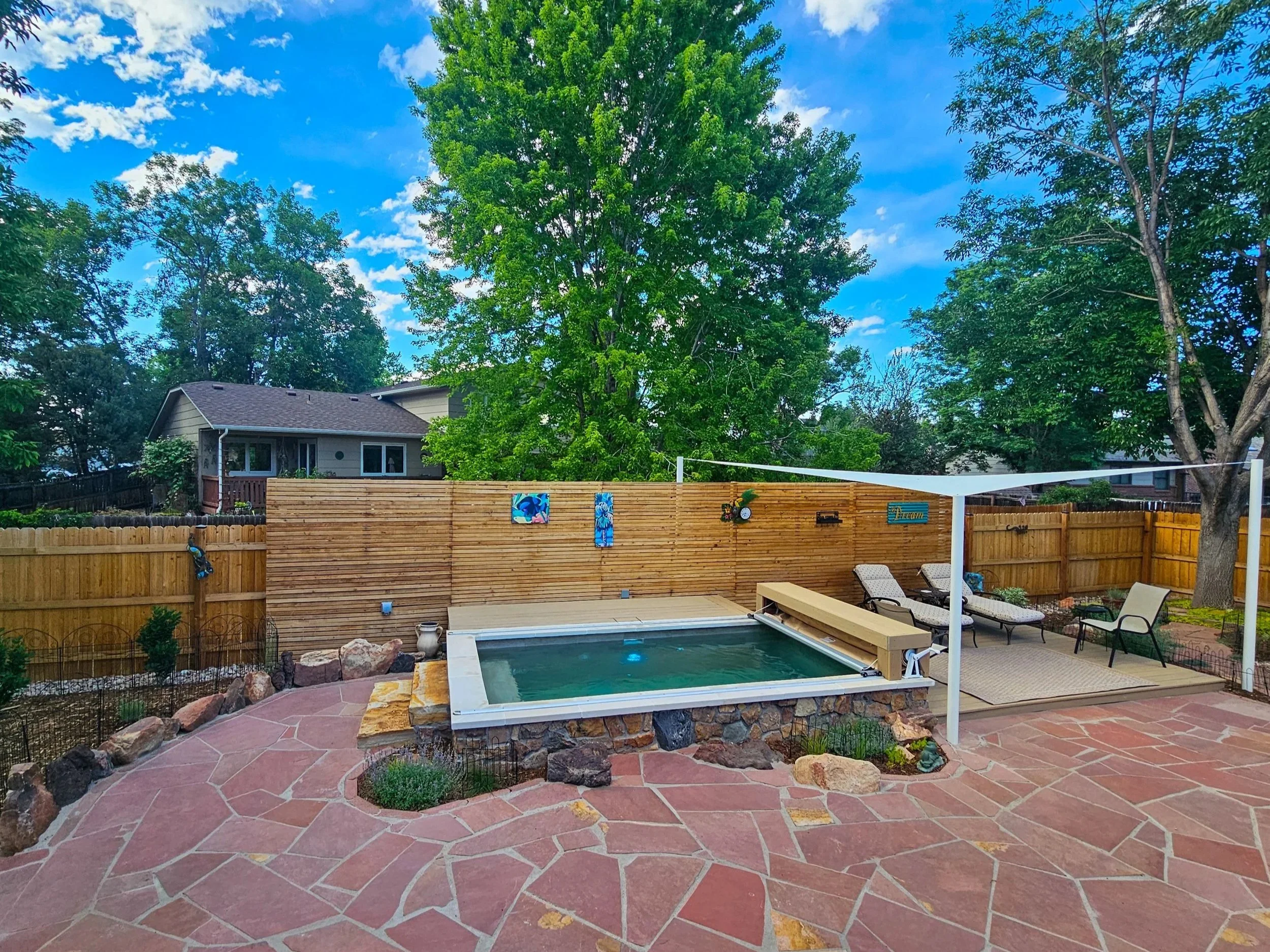
Flagstone patio with plunge pool
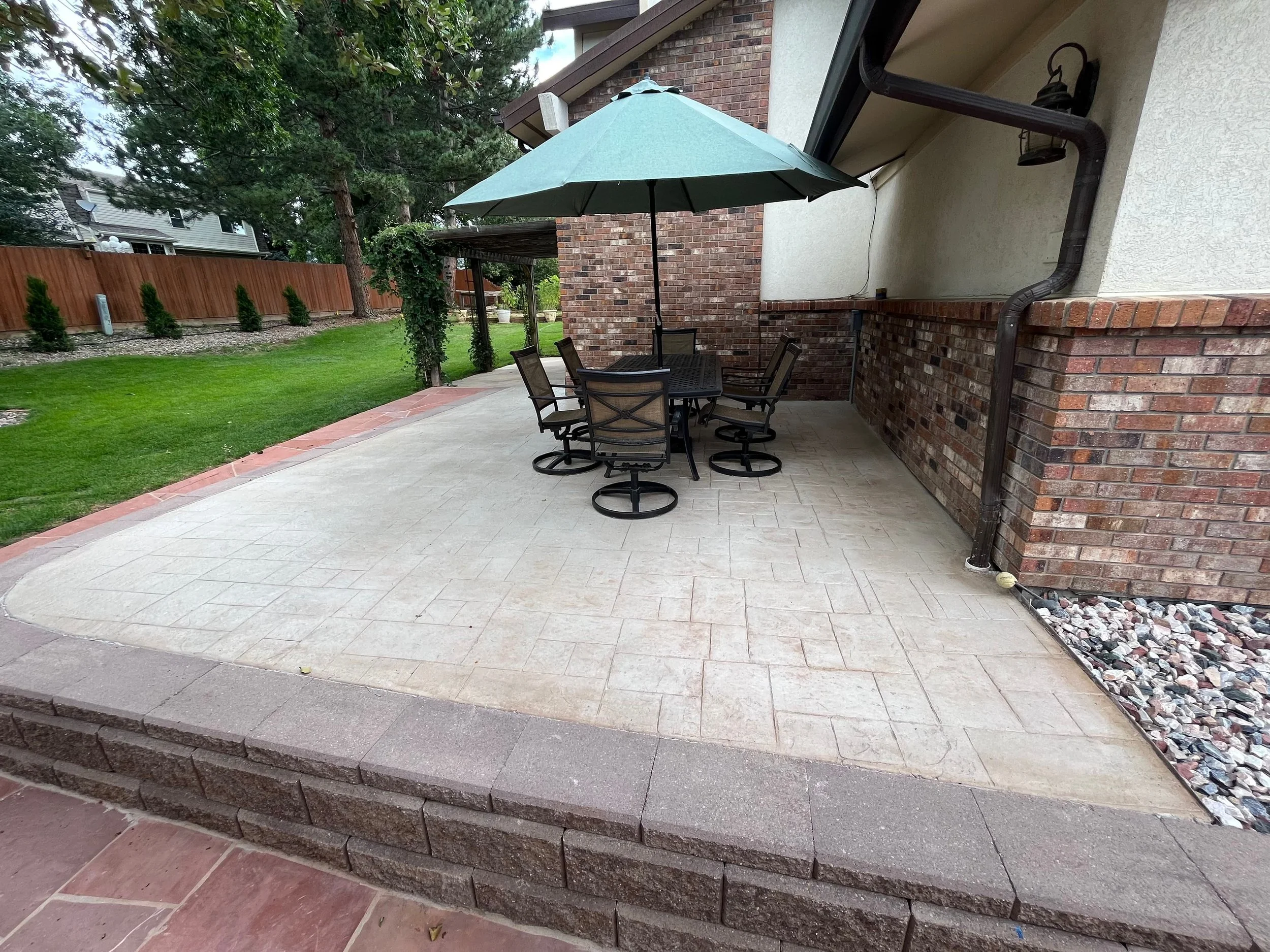
Paver patio with bordered edge
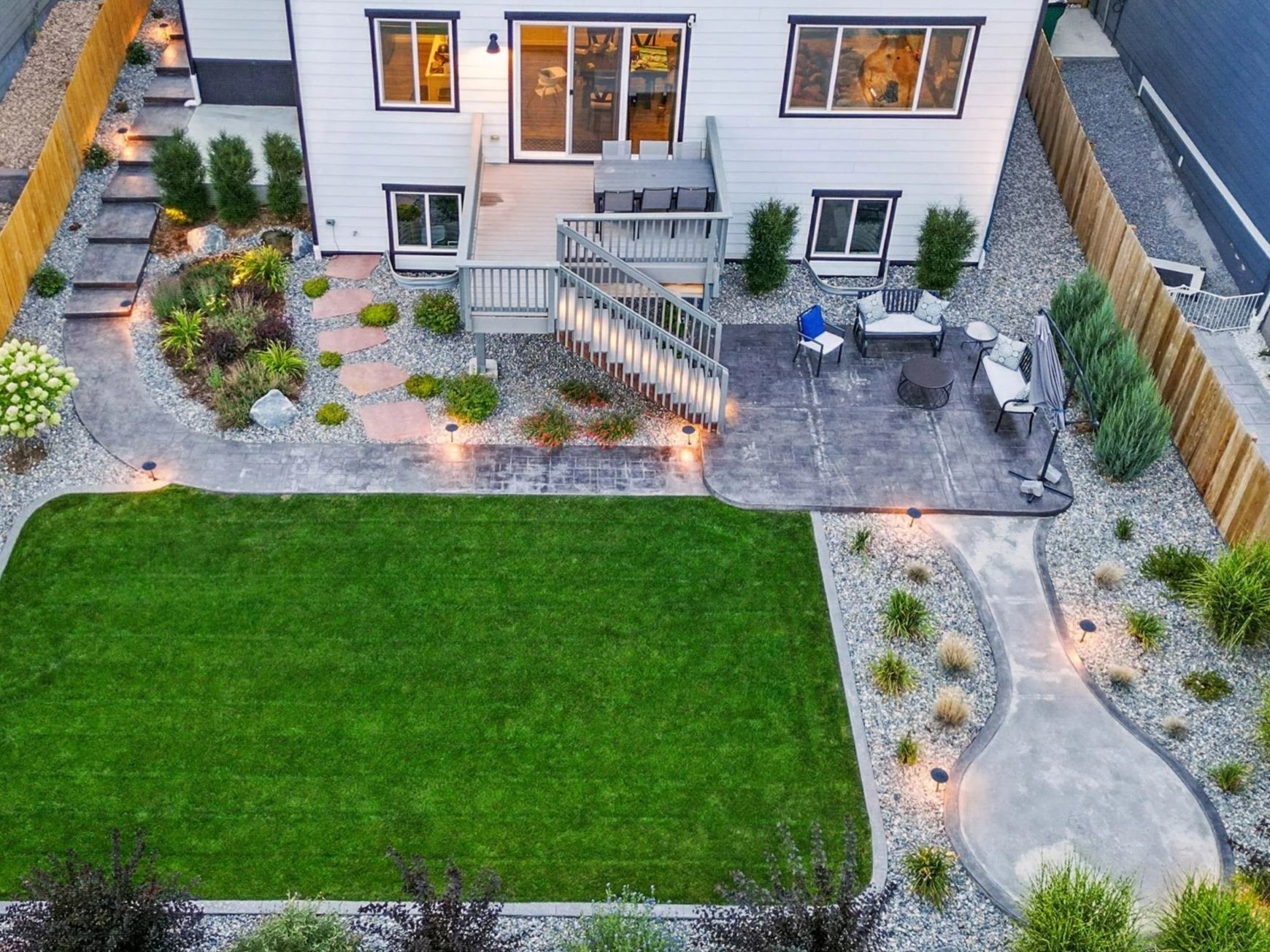
Stamped concrete patio and walkway
Comparison Table: Material, Durability, Cost, and Maintenance
| Material | Typical Lifespan | Upfront Cost (per sq ft) | Maintenance |
|---|---|---|---|
| Flagstone | 50+ years | $15 – $30+ | Periodic sealing, occasional joint sand refresh |
| Pavers | 25+ years | $12 – $22 | Occasional joint sand refresh, individual units replaceable |
| Stamped Concrete | 15 – 25 years | $8 – $15 | Resealing every 2–3 years, cracks difficult to repair invisibly |
These ranges reflect typical installed costs and will vary based on your specific site conditions, stone selection, and design complexity. On Niwot's clay soil, proper base prep can add to the upfront cost of any of these materials, but it's the single best investment for long-term performance regardless of which one you choose.
Maintenance Expectations by Material
Flagstone needs periodic sealing (roughly every two to three years depending on stone porosity and sun exposure) to protect against moisture absorption and staining. Joint sand between stones may need occasional refreshing, but individual stone replacement is rare when the base was prepped correctly.
Pavers are the lowest-maintenance option over time. Joint sand (ideally polymeric sand, which resists erosion better than standard sand) may need topping off every few years, and any individual unit that does settle or crack can be swapped without disturbing the rest of the patio.
Stamped concrete requires resealing every two to three years to protect the surface from Colorado's intense UV exposure at elevation, and once cracks appear, which they eventually will, repairs are difficult to blend seamlessly into the existing slab. Homeowners who choose stamped concrete for budget reasons should go in expecting some cracking over the life of the patio, not as a defect, but as a known trade-off of the material.
Ready to Start Your Niwot Patio Project?
Every property is different, and the right material for your patio depends on your lot, your budget, and how you want the finished space to look and function. Our team walks every site in person before recommending a material, since the right answer for a compact suburban lot is often different than the right answer for an open acreage property.
Learn more about our patio and outdoor living services, browse examples of our work on the Gallery page, or contact us for a free consultation and site walk.