
A patio can dramatically improve the way you use your backyard. It creates space for outdoor dining, lounge seating, fire features, and entertaining while providing a finished transition between your home and landscape.
One of the first decisions homeowners face is whether to install a paver patio or a concrete patio. Both materials can create attractive outdoor spaces, but they differ in appearance, installation, maintenance, repair options, and overall project cost.
For homeowners in Northern Colorado, the decision should also account for seasonal temperature changes, soil conditions, drainage, and how the patio will connect with the rest of the landscape.
At Premier Custom Landscapes, we believe the best patio material is the one that suits the home's architecture, the property's conditions, and the homeowner's goals.
This guide compares pavers and concrete to help you determine which option makes sense for your backyard.
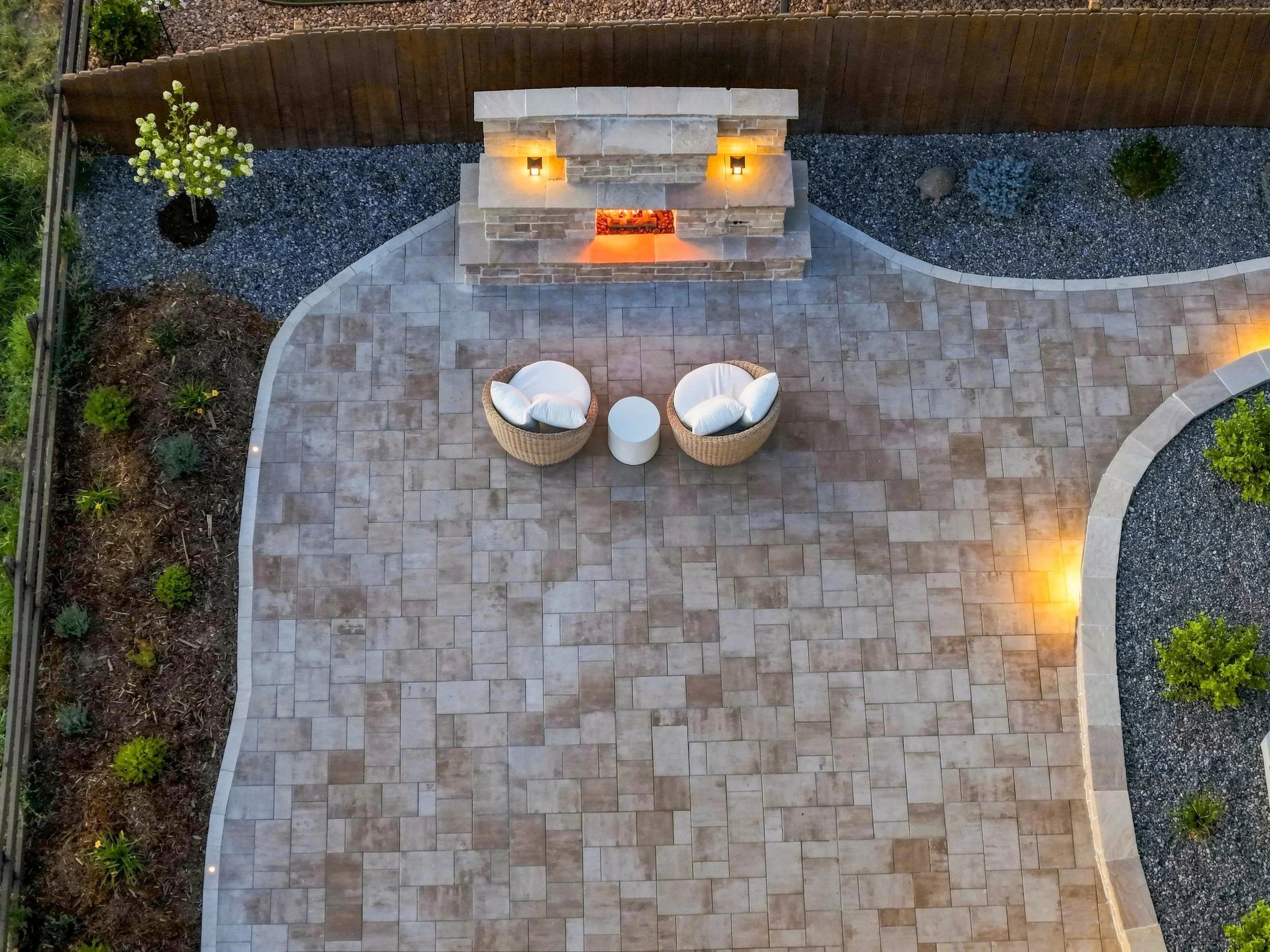
What Is a Paver Patio?
A paver patio is constructed from individual units installed over a prepared base. Depending on the project, the pavers may be made from concrete, clay brick, or natural stone.
Concrete pavers are especially popular for residential patios because they are available in a wide range of colors, textures, shapes, and patterns.
Individual pavers create joints between units, allowing the installation to be designed as a flexible paving system. Its performance depends on proper excavation, base preparation, edge restraint, joint material, drainage, and installation quality.
Paver patios can complement traditional homes, modern architecture, and high-end outdoor living spaces.
What Is a Concrete Patio?
A conventional poured-concrete patio is created by preparing the site, forming the slab, placing concrete, finishing the surface, and providing appropriate joints and curing.
Concrete can be finished in several ways, including broom finishes, exposed aggregate, colored finishes, and stamped patterns designed to resemble other materials.
A poured slab provides a relatively continuous surface, which can be useful for simple layouts and certain outdoor applications.
However, concrete is susceptible to cracking, and its long-term performance depends on site preparation, drainage, concrete quality, reinforcement where specified, joint placement, curing, and exposure conditions.
1. Appearance and Design Flexibility
Paver patios
Pavers offer extensive design flexibility. Homeowners can choose from multiple sizes, patterns, colors, textures, and border treatments.
A patio can feature a contrasting border, geometric patterns, curved seating areas, or transitions between different outdoor living zones.
Pavers also pair naturally with retaining walls, steps, landscape beds, outdoor kitchens, and fire features when the materials are selected as a coordinated system.
Concrete patios
Concrete can provide a clean, understated appearance. A simple broom-finished slab may suit a contemporary or practical backyard design, while stamped or colored concrete can create a more decorative result.
Concrete offers design flexibility, but the available appearance depends on the selected finishing method and the contractor's capabilities.
Which looks better? That comes down to the design. Pavers often appeal to homeowners who want more pattern and material variation, while concrete can work well for a simpler, more uniform surface.
2. Durability in Colorado's Climate
Northern Colorado experiences freezing temperatures, seasonal moisture changes, and periods of intense sun. Patio performance depends on more than the visible surface material.
Paver patio durability
A properly installed paver patio can accommodate small amounts of movement through its jointed construction. If localized settlement occurs, individual units can often be lifted, the base corrected, and the pavers reinstalled.
That does not mean pavers are immune to problems. Poor drainage, inadequate base preparation, weak edge restraint, and improper installation can lead to shifting, uneven areas, or joint deterioration.
Concrete patio durability
Concrete can provide a durable surface, but cracking is a common consideration. Temperature changes, soil movement, shrinkage, and other stresses can cause cracks even when a slab is professionally installed.
Control joints help manage where some cracking occurs, but they cannot guarantee that cracks will never develop.
Concrete exposed to freezing and thawing also needs to be appropriately specified and installed for the conditions.
Which is more durable? Both can last for many years with proper installation and maintenance. The best choice depends on site conditions, installation quality, and the type of repair you prefer to manage.
3. Installation and Site Preparation
Both patio types require appropriate site preparation.
For pavers, the contractor generally excavates the area, prepares and compacts a suitable base, establishes drainage and elevations, installs bedding material where specified, places the units, secures the edges, and completes the joints.
For concrete, the contractor prepares the subgrade and base as specified, installs forms and any required reinforcement, places and finishes the concrete, provides appropriate joints, and manages curing.
Neither material should be installed without evaluating how water will move around the patio and nearby structures.
For Northern Colorado properties, proper preparation can be especially important where soil conditions, existing drainage, or changes in elevation create challenges.
4. Maintenance Requirements
Maintaining pavers
Paver patios may need periodic sweeping, joint-material replenishment, weed management, and occasional cleaning. Sealers are optional in many applications and should be selected based on the paver manufacturer's recommendations and the desired finish.
If individual units settle or become damaged, repairs can often be limited to the affected area.
Maintaining concrete
Concrete generally benefits from regular cleaning and attention to drainage. Depending on the finish and exposure, sealing may be appropriate.
Cracks should be evaluated and repaired as needed. A repair may remain visible, especially when the surrounding concrete has aged or weathered.
Which is easier to maintain? Both require some maintenance. Pavers can offer an advantage for localized repairs, while concrete provides a continuous surface that does not have the same quantity of joints to manage.
5. Repairing Damage
Repairability is an important consideration when selecting patio materials.
With a paver patio, individual units can often be removed and replaced if they are damaged or if access to underground utilities is needed. The surrounding area may need to be reset if the underlying base has shifted.
With a concrete patio, repairing a damaged section may require patching, cutting out a portion of the slab, or replacing a larger area. Color and texture differences can make repairs noticeable.
The best repair method depends on the type and extent of the problem.
6. Cost: Pavers vs. Concrete
The cost of a patio depends on its size, material selection, design complexity, excavation, base requirements, drainage, access, steps, retaining walls, and other site-specific factors.
A basic concrete patio may have a lower initial installation cost than a more elaborate paver patio. However, decorative concrete and complex finishes can increase the price, while straightforward paver designs may cost less than intricate layouts with premium materials.
For an accurate comparison, request estimates for the same dimensions and project scope. Make sure each estimate accounts for site preparation, drainage, demolition if needed, finishing, and any required steps or retaining walls.
Do not choose based solely on the price per square foot without checking what is included.
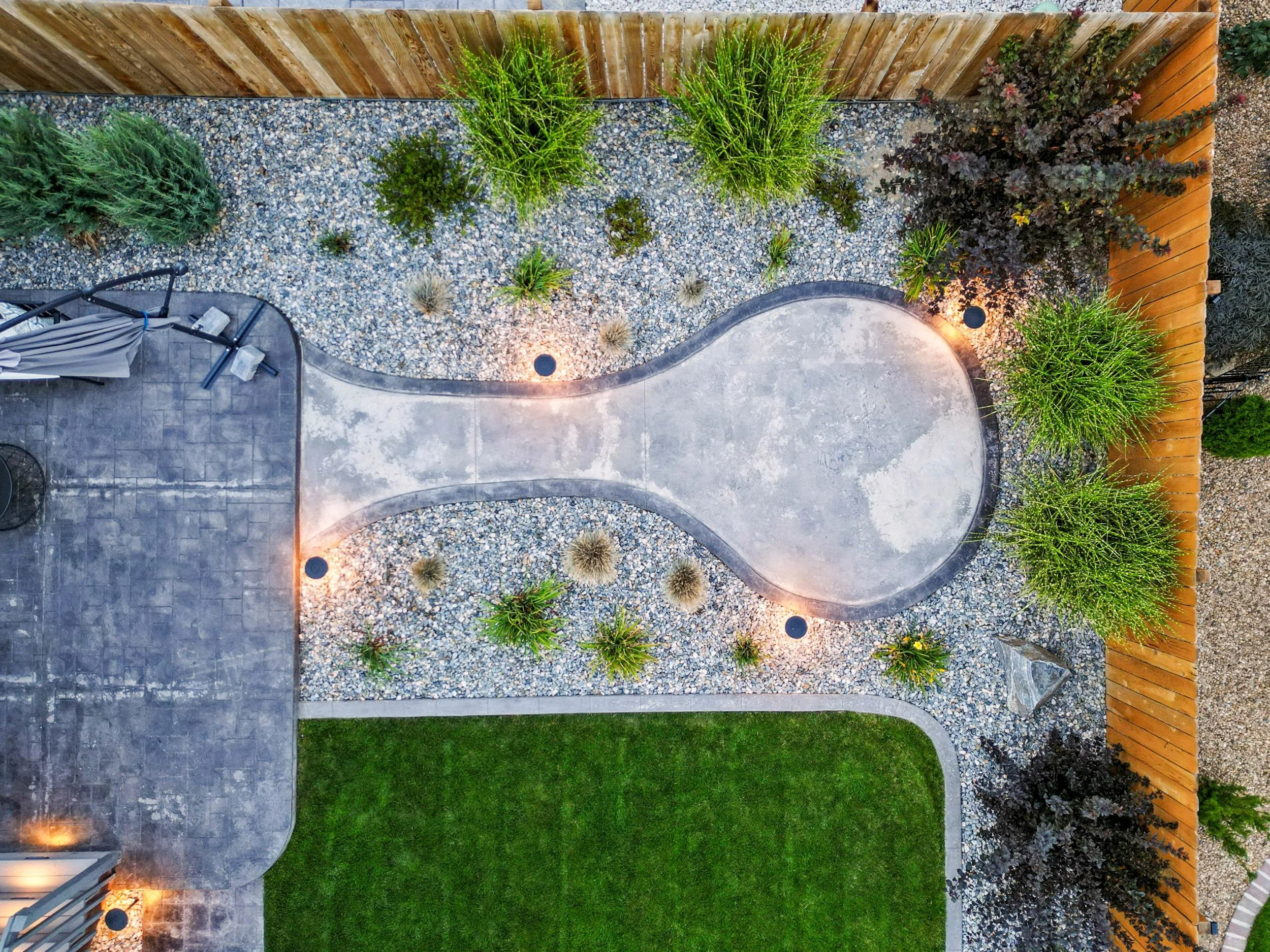
7. Which Patio Is Better for Outdoor Living?
If you're building a simple area for a grill and a few chairs, concrete may be a practical choice.
If you're planning a larger outdoor living environment with a custom pattern, fire pit, retaining walls, outdoor kitchen, or multiple seating areas, pavers may offer more opportunities to coordinate the different elements.
The layout matters as much as the material. Consider how much room is needed for furniture, walking paths, doors, grills, and entertaining.
A well-designed patio should feel comfortable and easy to navigate rather than simply fill the available space.
8. Which Is Better for a Pool Patio?
Both concrete and appropriate paver products can be used around swimming pools, provided the materials and installation are suitable for that application.
Around a pool, consider traction when wet, surface temperature, drainage, comfort underfoot, and compatibility with the pool design.
Not every paver finish or concrete treatment is appropriate for every pool environment. Ask your contractor about the product's intended use and maintenance requirements.
Final Verdict: Pavers or Concrete?
Choose a paver patio if you value design flexibility, coordinated hardscape materials, and the ability to replace individual units when localized repairs are needed.
Choose a concrete patio if you prefer a continuous surface and a straightforward layout, and the selected finish fits your design and budget.
Neither option is universally better. The right decision depends on your property, budget, preferred appearance, and long-term maintenance expectations.
Plan Your Northern Colorado Patio Project
A patio should work with the entire backyard, including the home, planting beds, walkways, drainage, and outdoor living features.
Premier Custom Landscapes helps Northern Colorado homeowners design and build outdoor spaces that combine hardscaping, landscaping, and functional entertaining areas.
If you're considering a new patio, visit Premier Custom Landscapes to explore our services and discuss your project.