
Moving into a newly built home is exciting, but the outdoor space may look unfinished long after the interior is complete. Bare soil, construction debris, minimal planting, and an empty backyard can make it difficult to picture the property's full potential.
For homeowners in Northern Colorado, landscaping a new construction home is an opportunity to create an outdoor environment tailored to their lifestyle from the beginning.
Rather than adding features randomly over time, you can develop a coordinated plan that accounts for drainage, planting, irrigation, patios, walkways, outdoor kitchens, and future improvements.
At Premier Custom Landscapes, we believe new construction landscaping should be approached as a complete design and installation project. A well-planned landscape can improve curb appeal, establish usable outdoor space, and help turn a newly built house into a finished home.
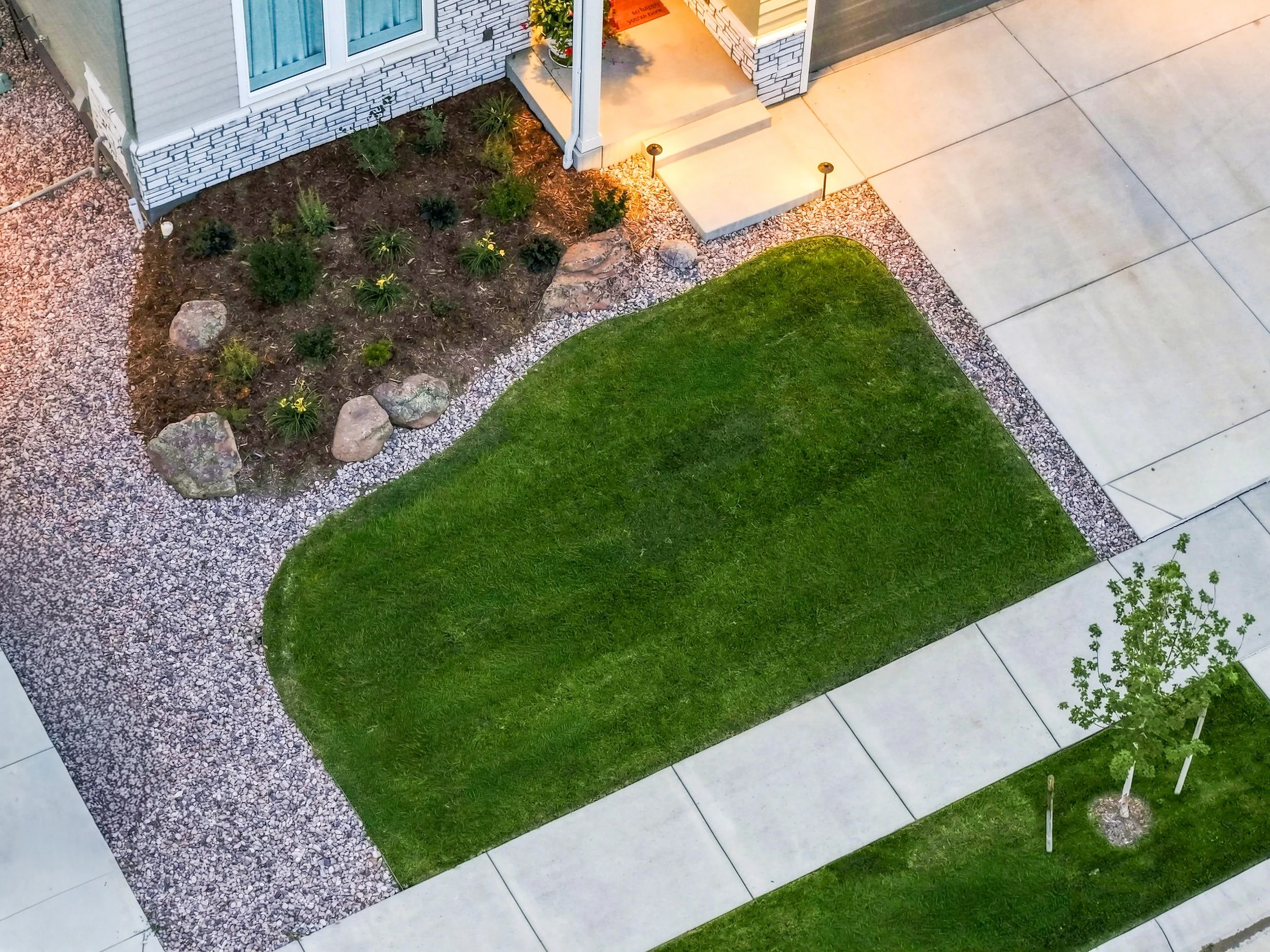
Why New Construction Landscaping Requires Planning
Newly developed properties can present landscaping challenges that are less obvious at first glance.
Construction equipment may have compacted the soil, grading may need further evaluation, and the backyard may lack established trees or shade. Builders may also have specific landscaping requirements, deadlines, or allowances that influence the project.
Before selecting plants or installing a patio, determine what work has already been completed and what remains your responsibility.
Review your builder's landscaping package, warranty conditions, grading documentation, irrigation provisions, and any applicable neighborhood or municipal requirements.
This can help prevent duplicated work and identify important site issues before they become expensive problems.
Step 1: Establish a Complete Landscape Design
The first step is determining how you want to use the property.
Do you want a low-maintenance backyard, a large lawn for recreation, an outdoor kitchen, a custom swimming pool, or a luxury entertaining area?
Your answers influence the layout, material selection, planting plan, irrigation design, and construction sequence.
A comprehensive landscape plan may include:
Front-yard planting and curb appeal.
Trees and shrubs for shade or privacy.
Lawn and planting-bed locations.
Paver patios and walkways.
Retaining walls and grade transitions.
Outdoor kitchens and fire features.
Landscape lighting.
Irrigation and drainage considerations.
Space for future pool installation.
Planning these elements together can create a more cohesive result than installing each feature independently.
Step 2: Evaluate Grading, Drainage, and Soil
Drainage should be addressed before installing finished landscaping.
Water must flow appropriately across the property without creating unwanted ponding near the home, undermining hardscaping, or discharging improperly onto neighboring properties.
Construction can also leave compacted soil, uneven surfaces, or areas that need additional preparation before planting.
Have the site evaluated for grading and drainage concerns before adding soil, building retaining walls, or installing patios.
Where significant grading changes or retaining walls are required, additional engineering, permits, or professional assessments may be necessary.
Addressing these issues early helps protect the investment in the finished landscape.
Step 3: Choose Plants for Northern Colorado
New homes often have little mature vegetation, so trees and shrubs can make an immediate visual difference.
However, the right plants depend on sunlight, soil conditions, available water, wind exposure, mature size, and the amount of maintenance you want.
Consider a combination of trees, shrubs, ornamental grasses, and perennials rather than relying on one plant type throughout the yard.
Native and regionally adapted plants can be valuable components of a water-wise design. Still, all plants need suitable growing conditions, and newly installed trees and shrubs require appropriate establishment care.
Choose plants that fit their intended locations and allow room for mature growth.
Step 4: Plan Your Lawn and Irrigation
A lawn can provide useful recreation space and a clean visual contrast with patios and planting beds.
The key is deciding how much turf your household actually needs.
If you want space for children, pets, or outdoor activities, preserve an appropriately sized lawn. If your backyard is primarily for dining and entertaining, you may prefer more hardscaping and smaller planting areas.
Irrigation should be designed around the landscape's different water requirements. Turf, trees, shrubs, and perennial beds may need separate zones or delivery methods.
An efficient system can help manage water use, but it still requires inspections, seasonal adjustments, and proper winterization in Colorado.
Step 5: Install Patios and Walkways
Hardscaping creates the structure of a new backyard.
A paver patio can establish an outdoor dining area, while walkways provide convenient connections between doors, seating, gardens, and other features.
Consider furniture placement and circulation before finalizing patio dimensions. Make sure there is adequate space for chairs to move, people to walk around a dining table, and access to grills or other equipment.
The patio should also be coordinated with finished grades and drainage.
Installing the right hardscaping early can make the rest of the landscape easier to organize.
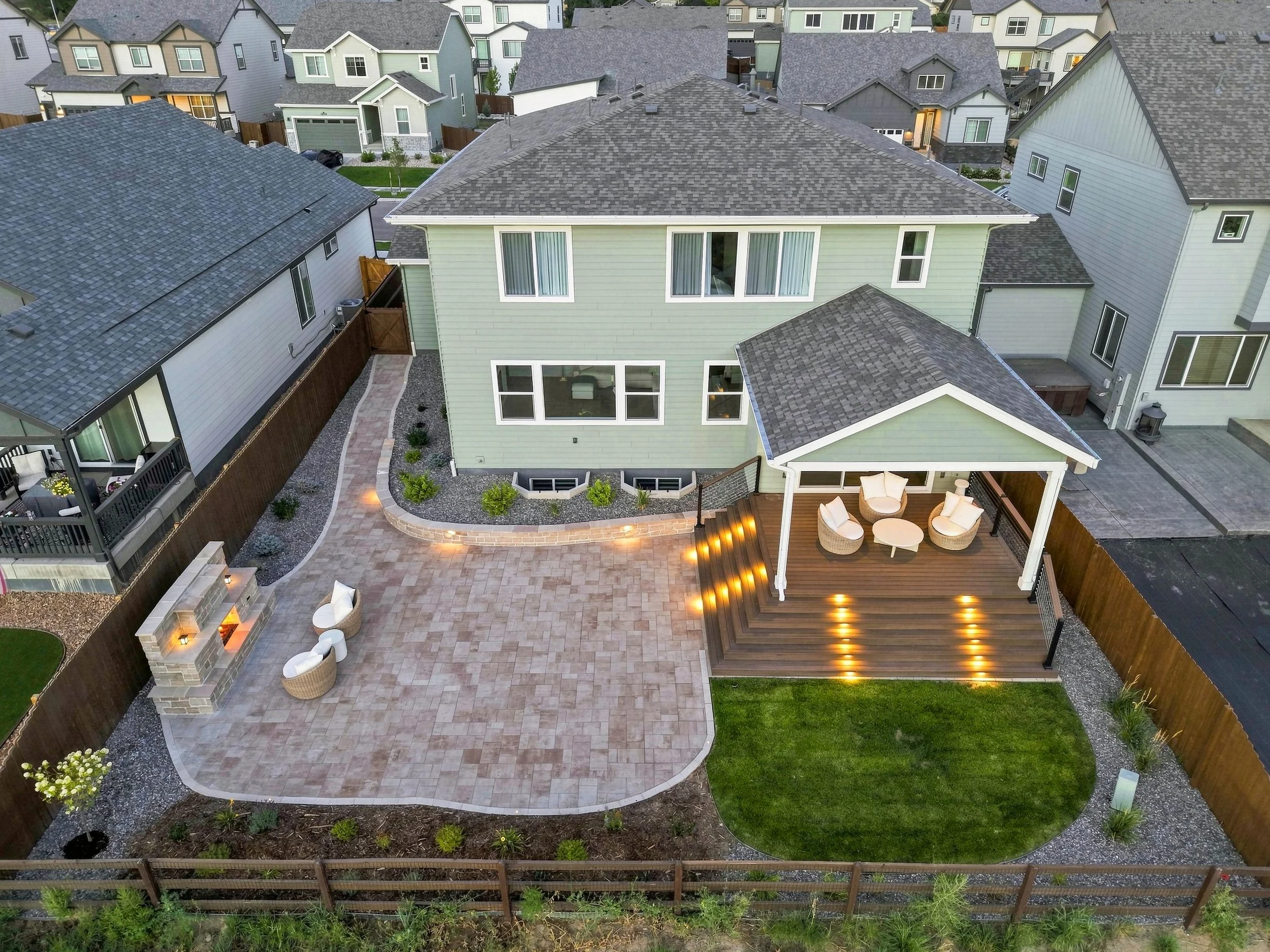
Step 6: Consider Outdoor Living Features
New construction is an ideal time to think about how the backyard could evolve into a complete outdoor living space.
Depending on your goals, you may want an outdoor kitchen, pergola, covered patio, fire pit, landscape lighting, or swimming pool.
Even if you cannot complete every feature immediately, the initial landscape plan should consider future placement and access.
For example, planning for a future pool may affect where trees are planted, how utilities are routed, and where the primary patio should be located.
Coordinating the design early can help reduce the need to remove established landscaping later.
Step 7: Understand Your Landscaping Budget
The cost of new construction landscaping depends on property size, existing builder provisions, grading, irrigation, plant selection, hardscaping, access, and the complexity of the design.
A simple planting and lawn installation is a different project from a complete backyard transformation featuring retaining walls, paver patios, lighting, and an outdoor kitchen.
Start by identifying your essential needs and desired upgrades.
You can divide the project into phases, but the overall plan should be established before work begins. This allows later additions to fit the original design instead of creating awkward transitions.
When comparing contractors, ask for a clear scope of work, material specifications, exclusions, and information about how site conditions or change orders will be handled.
Should You Landscape Your New Home in Phases?
Phased landscaping can be a practical approach when you want to spread out project expenses.
However, some work should be coordinated before other features are installed.
Drainage, grading, underground utilities, irrigation infrastructure, and the general layout should be addressed before finished patios and planting beds are completed.
A sensible sequence might begin with site preparation and essential planting, followed by the primary patio and lawn, and then additional features such as lighting, an outdoor kitchen, or a pool.
The correct sequence depends on the project. A landscape designer can help establish priorities and identify which work should happen together.
Common New Construction Landscaping Mistakes
Avoid planting trees without accounting for their mature size, installing patios before resolving drainage concerns, and choosing materials without considering how they coordinate with the home's exterior.
Other common mistakes include underestimating the space required for furniture, ignoring privacy needs, and installing irrigation without a long-term maintenance plan.
It is also important to understand any builder obligations or neighborhood requirements that apply to your property.
Transform Your New Build Into a Finished Outdoor Space
A new construction home offers a fresh start for landscape design. With careful planning, you can create a yard that fits your lifestyle, complements your home's architecture, and accommodates future improvements.
Premier Custom Landscapes works with homeowners in Northern Colorado to plan and build customized outdoor environments, from landscape installation and paver patios to outdoor living features and pool-related projects.
Ready to finish your new home with a landscape designed around your needs? Visit Premier Custom Landscapes to learn more about our services.