
How Much Does a Retaining Wall Cost in Colorado?
Retaining walls can completely change the way a backyard looks and functions.
For Colorado homeowners dealing with a sloped yard, drainage problems, erosion, or limited usable space, a properly designed retaining wall can create level areas for patios, lawns, planting beds, outdoor kitchens, fire pits, and other outdoor living features.
One of the first questions homeowners ask is:
"How much does a retaining wall cost in Colorado?"
The answer depends on several factors, including the wall's size, height, materials, site conditions, excavation, drainage requirements, accessibility, engineering requirements, and overall design.
A small decorative landscape wall is very different from a large structural retaining wall supporting a patio or creating multiple levels in a sloped backyard.
At Premier Custom Landscapes, we design and install retaining walls as part of complete landscape and outdoor living projects throughout Northern Colorado.
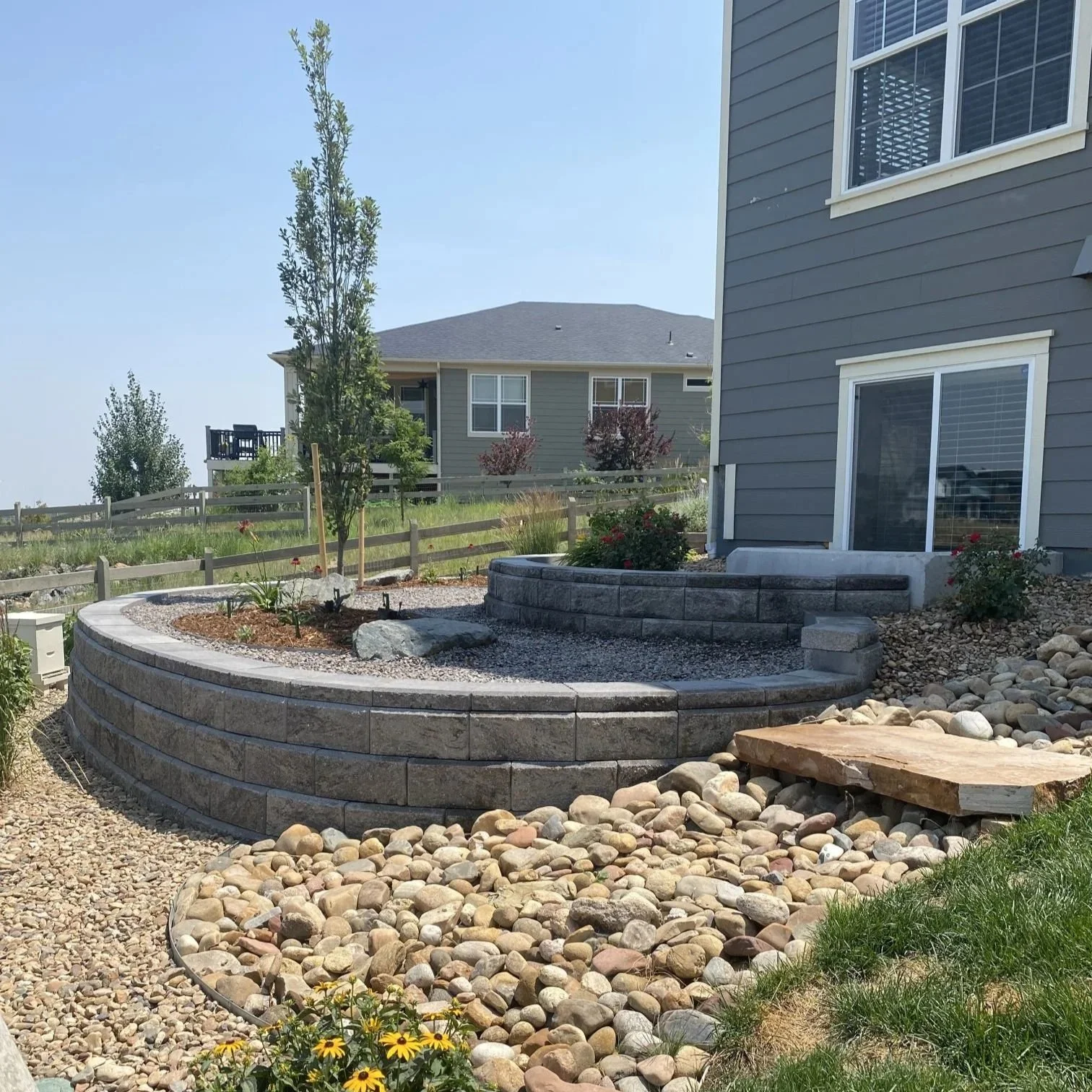
What Is a Retaining Wall?
A retaining wall is a structure designed to hold soil in place and manage changes in elevation.
Retaining walls can be used for both practical and aesthetic purposes.
They can:
Create level areas
Control erosion
Manage slopes
Support patios
Define planting beds
Improve usable yard space
Create multiple outdoor living levels
Help manage certain drainage conditions
Rather than looking at a retaining wall as simply a structure that holds dirt back, a good landscape design can make the wall an important part of the overall backyard.
What Determines the Cost of a Retaining Wall?
There isn't a universal cost for retaining wall installation.
The biggest factors include the following.
1. Wall Size
The size of the wall is one of the most obvious factors affecting the cost.
A wall that's 20 feet long and relatively short requires much less material and labor than a wall that's 80 feet long and several feet tall.
The amount of excavation, base material, drainage, backfill, and construction required increases as the wall becomes larger.
It's important to consider both:
Length
and
Height
when evaluating the scope of a retaining wall project.
2. Wall Height
Height is particularly important because taller walls generally require more engineering and structural consideration.
A short decorative wall may primarily serve as a landscape feature.
A taller wall may need to support a significant amount of soil and could potentially support additional loads above it, such as a patio, driveway, structure, or other landscaping features.
The taller and more structurally significant the wall becomes, the more important proper design and construction become.
3. Retaining Wall Material
The material you choose will influence both appearance and cost.
Common retaining wall materials include:
Concrete block
Segmental retaining wall systems
Natural stone
Large landscape blocks
Boulder walls
Concrete
Specialty masonry
Each material creates a different appearance.
For example, natural stone or boulders can provide a more organic Colorado landscape aesthetic, while manufactured retaining wall systems can create clean, structured lines.
The material should complement your:
Home
Patio
Walkways
Plantings
Outdoor kitchen
Pool
Other hardscaping
4. Excavation
Before a retaining wall can be installed, the site may require excavation.
The amount of excavation depends on:
Existing grade
Wall height
Soil conditions
Wall design
Access
Existing landscaping
If an area already contains trees, concrete, landscaping, or other structures, additional work may be necessary to prepare the site.
5. Drainage
Drainage is one of the most important parts of retaining wall construction.
Water pressure behind a retaining wall can create significant problems if it isn't properly managed.
Depending on the site, a retaining wall may require drainage solutions such as:
Drainage rock
Perforated drain pipe
Proper backfill
Grading
Drain outlets
Other site-specific drainage systems
A retaining wall can look perfect when it's first installed, but poor drainage can create problems later.
That's why drainage should be considered during the design and construction process.
6. Soil Conditions
Soil conditions can affect how a retaining wall needs to be designed and installed.
Colorado properties can have different soil types and site conditions, and these conditions can vary from one property to another.
Before construction, the contractor should evaluate the site and determine the appropriate approach.
This can influence:
Excavation
Base preparation
Drainage
Backfill
Wall design
Structural requirements
7. Access to the Property
Access is another factor homeowners sometimes overlook.
If construction equipment and materials can easily reach the work area, installation may be more straightforward.
If the backyard has limited access, additional labor or specialized equipment may be necessary.
Narrow side yards, fences, landscaping, and existing structures can all affect how materials and equipment reach the project area.
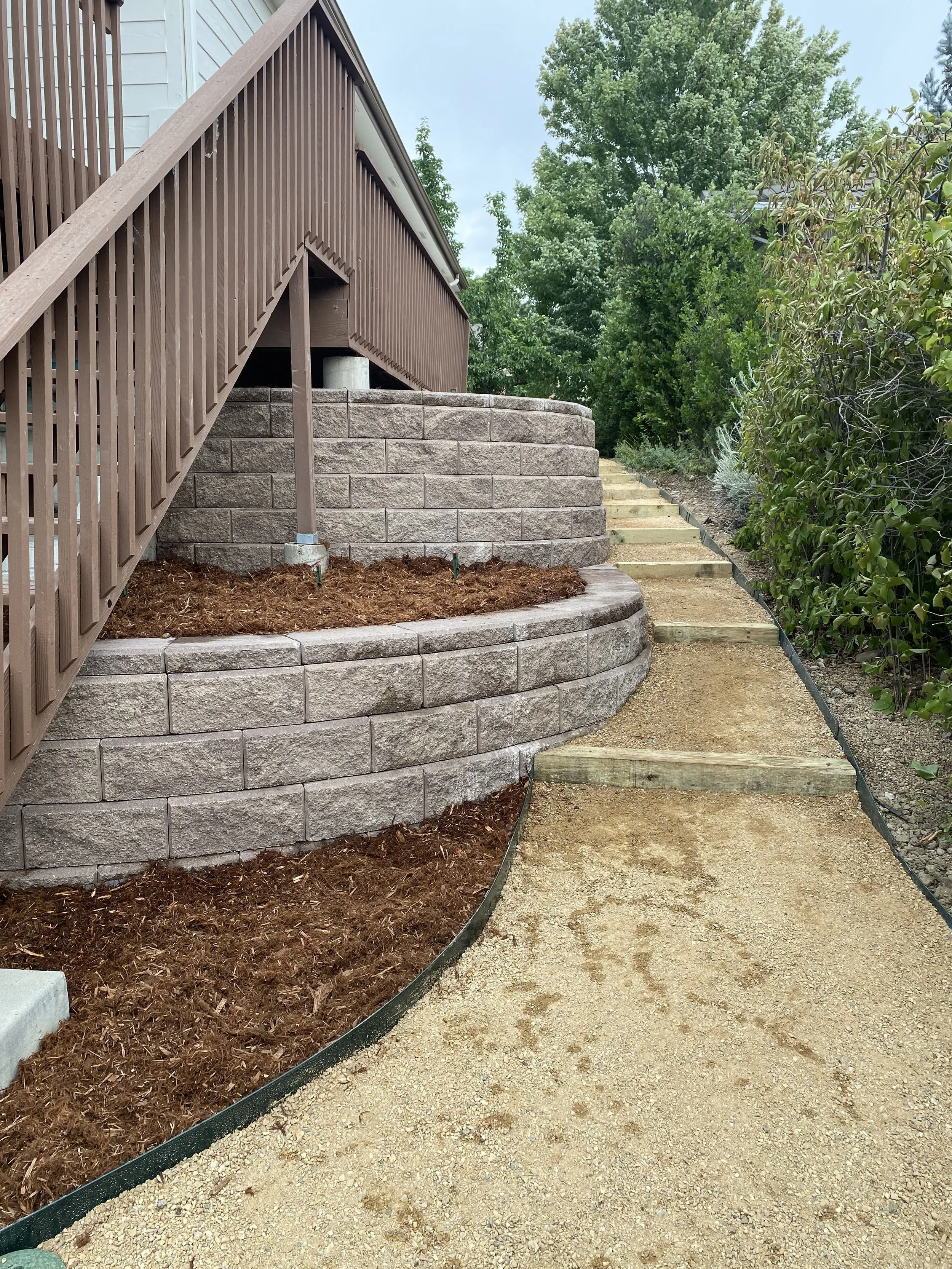
Retaining Walls for Sloped Backyards
One of the most common reasons homeowners install retaining walls is to make a sloped backyard more usable.
A steep or uneven backyard can limit what you can do with the space.
A retaining wall can create a series of level areas.
For example:
Upper Level
Paver patio and outdoor kitchen
Middle Level
Lawn and planting areas
Lower Level
Fire pit and seating area
Steps can connect each level.
Instead of fighting the natural slope of the property, the landscape design works with it.
Retaining Walls and Paver Patios
Retaining walls and patios often work together.
If your backyard slopes away from your house, a retaining wall may allow you to create a level area for a patio.
This can create opportunities for:
Outdoor dining
Lounge furniture
Fire pits
Outdoor kitchens
Pergolas
A retaining wall can also be incorporated directly into the patio design.
For example, the wall could double as a seat wall or define the edge of the patio.
Retaining Walls Around Swimming Pools
Retaining walls can also play an important role in pool projects.
If your property has elevation changes, retaining walls may be necessary to create the appropriate area for a pool and surrounding patio.
A pool landscape might include:
Retaining walls
Pool deck
Paver patio
Steps
Planting beds
Outdoor kitchen
Fire pit
Landscape lighting
Planning these elements together can make the pool feel integrated into the landscape.
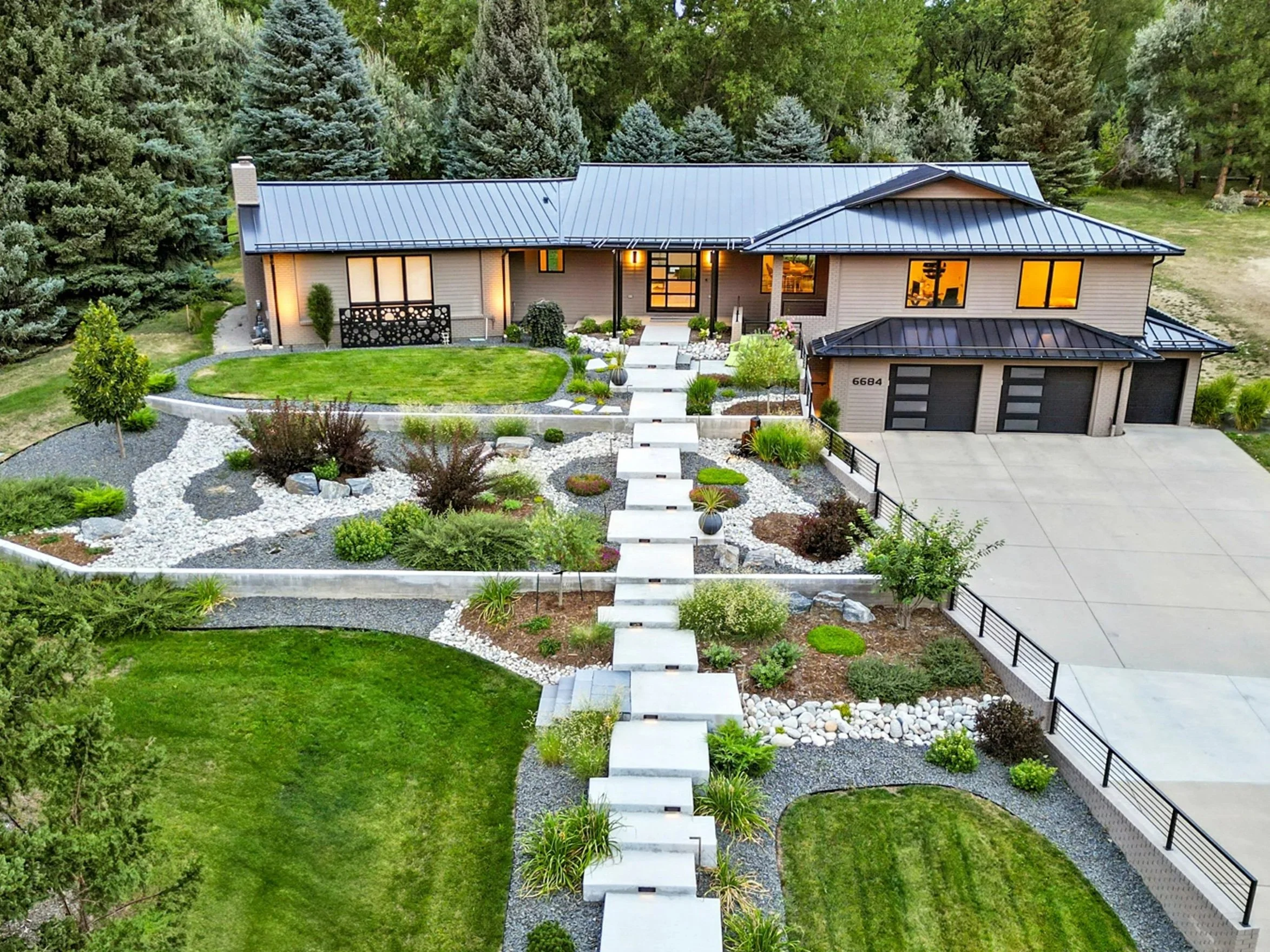
Retaining Walls as a Design Feature
Retaining walls don't have to look purely functional.
A well-designed wall can become an attractive architectural element.
For example, a wall can be used to:
Frame a patio
Define a planting bed
Create a seating area
Separate different elevations
Highlight a fire pit
Create a border around a pool
Adding landscape lighting can further emphasize the wall after dark.
Plants can also soften the appearance of the structure.
Boulder Retaining Walls
For homeowners looking for a more natural Colorado appearance, boulders can be incorporated into landscape designs.
Boulder walls can provide an organic look that works particularly well with:
Native landscaping
Ornamental grasses
River rock
Natural stone
Xeriscaping
The design should still account for stability, drainage, grade, and the specific conditions of the property.
Can a Retaining Wall Fix Drainage Problems?
Retaining walls can be part of a drainage solution, but a retaining wall by itself isn't necessarily a drainage system.
The entire site needs to be evaluated.
Depending on the situation, drainage improvements may involve:
Regrading
Drainage pipe
Catch basins
Downspout management
Swales
Properly designed retaining walls
Appropriate landscape grading
If your property has standing water or erosion, the underlying cause should be addressed rather than simply installing a wall.
Do Retaining Walls Require Permits or Engineering?
Requirements can vary depending on the location, wall height, design, and local regulations.
Some retaining walls may be relatively simple landscape structures, while taller or structurally significant walls can require additional engineering or permitting.
Before construction, it's important to determine what requirements apply to your specific project.
A professional contractor can help identify when additional design or engineering may be necessary.
How Long Does a Retaining Wall Last?
A properly designed and installed retaining wall can provide many years of service.
Its longevity depends on:
Proper foundation preparation
Drainage
Materials
Construction quality
Soil conditions
Wall design
Maintenance
Drainage is particularly important.
A high-quality retaining wall isn't simply about the visible blocks or stone.
The work below and behind the wall is critical to its long-term performance.
How to Get an Accurate Retaining Wall Estimate
Online pricing can only provide a general starting point.
An accurate estimate requires an evaluation of the actual property.
A contractor should consider:
Wall length
Wall height
Materials
Soil conditions
Existing grade
Excavation
Drainage
Access
Engineering requirements
Landscaping around the wall
It's also helpful to determine what the wall is supposed to accomplish.
Is it simply decorative?
Does it create space for a patio?
Is it controlling a slope?
Is it part of a pool project?
The answer can significantly affect the design.
Why Choose Premier Custom Landscapes?
Premier Custom Landscapes provides custom retaining wall design and installation throughout Northern Colorado.
Our retaining wall projects can be incorporated into larger landscape and outdoor living projects involving:
Landscape design
Paver patios
Walkways
Outdoor kitchens
Fire pits
Pergolas
Custom pools
Fiberglass pools
Pool decks
Landscape lighting
Planting
Drainage
Complete backyard transformations
This allows us to design the retaining wall as part of the entire property rather than treating it as an isolated structure.
We serve homeowners throughout Erie, Longmont, Firestone, Frederick, Mead, Niwot, Boulder, Broomfield, Lafayette, Louisville, Fort Collins, and surrounding Northern Colorado communities.
Transforming a Sloped Backyard
A sloped backyard doesn't necessarily have to be a limitation.
With thoughtful design, elevation changes can become one of the most interesting aspects of the property.
A series of retaining walls, steps, patios, planting areas, and outdoor living spaces can transform an unusable slope into a functional backyard.
Imagine stepping out of your home onto a beautiful paver patio, walking down a few landscaped steps to a lower fire pit area, and continuing toward a pool surrounded by landscaping.
That's the type of transformation that becomes possible when the landscape is designed as a complete system.
Ready to Plan Your Retaining Wall Project?
If you're dealing with a sloped yard, erosion, drainage concerns, or simply want to create more usable space, a retaining wall may be part of the solution.
The best place to start is with a comprehensive evaluation of your property and a landscape design that considers the wall, surrounding landscaping, drainage, patios, outdoor living areas, and any future improvements.
Premier Custom Landscapes can help design and build retaining walls that are both functional and attractive.
Contact us today to discuss your Northern Colorado retaining wall project.
Frequently Asked Questions
How much does a retaining wall cost in Colorado?
The cost depends on the wall's length, height, materials, excavation, drainage, site conditions, accessibility, and structural requirements. Every property is different.
What is the best retaining wall material?
There isn't one material that's best for every project. Concrete block, natural stone, boulders, and other retaining wall systems can all be appropriate depending on the design and site.
Can retaining walls create more usable backyard space?
Yes. Retaining walls can create level areas on sloped properties, allowing homeowners to build patios, lawns, planting beds, fire pits, and other outdoor living spaces.
Do retaining walls need drainage?
Proper drainage is an important part of retaining wall construction. The specific drainage system depends on the wall and site conditions.
Can retaining walls be used around a pool?
Yes. Retaining walls can be incorporated into pool landscapes to manage elevation changes and create usable areas for pool decks, patios, landscaping, and outdoor living.
How long does a retaining wall last?
A properly designed and installed retaining wall can last for many years. Proper foundation preparation, drainage, materials, and construction are important factors in long-term performance.