
Best Privacy Trees for Colorado Backyards: A Homeowner's Guide
Creating privacy in your backyard can make a major difference in how comfortable and enjoyable your outdoor space feels. Whether you want to block views from neighboring homes, screen a busy street, create a secluded patio, or make your swimming pool area feel more private, thoughtfully selected trees can provide an attractive and long-lasting solution.
For homeowners in Northern Colorado, choosing privacy trees requires more planning than simply purchasing the tallest trees available. Colorado's dry climate, changing temperatures, alkaline soils in many areas, wind exposure, and periodic drought conditions all influence which trees will perform well.
At Premier Custom Landscapes, we understand that successful landscape design involves balancing privacy, beauty, functionality, and long-term maintenance. The right combination of trees, shrubs, planting beds, patios, and outdoor living features can transform an exposed backyard into a more comfortable retreat.
In this guide, we explore some of the best trees to consider for backyard privacy in Northern Colorado and explain how to incorporate them into a complete landscape design.
Why Privacy Landscaping Matters in Northern Colorado
Many Northern Colorado neighborhoods feature relatively close property lines, growing communities, and homes with elevated views into neighboring backyards. New construction can also leave homeowners with limited mature vegetation and little natural screening.
Privacy landscaping can help:
Create a more secluded outdoor living area.
Screen views from neighboring properties.
Add visual interest and structure to the landscape.
Soften fences, walls, and property boundaries.
Provide shade and wind protection when trees are appropriately placed.
Create a more comfortable setting around patios, pools, and outdoor kitchens.
Trees are especially useful because they can provide vertical screening without requiring a solid fence along the entire property line. Depending on the species, they may also offer seasonal color, attractive foliage, flowers, or wildlife habitat.
Best Evergreen Trees for Privacy in Colorado
Evergreen trees are popular for privacy landscaping because they retain foliage throughout the year. They can provide screening during winter, when deciduous trees lose their leaves.
However, not every evergreen performs equally well in every Colorado location. Consider the tree's mature size, water requirements, wind tolerance, soil conditions, and available planting space before making a selection.
1. Colorado Blue Spruce
Colorado blue spruce is recognized for its blue-green needles and strong pyramidal form. It can create an attractive visual screen while serving as a focal point in a larger landscape.
Blue spruce needs adequate room to reach its mature size and may struggle in some residential settings because of heat, drought stress, and certain diseases. It should not automatically be the first choice for every privacy project.
For larger properties, carefully positioned spruce trees can add height and year-round visual interest. On smaller lots, their eventual width may make them impractical near fences, patios, or buildings.
2. Austrian Pine
Austrian pine is a large evergreen that can provide substantial screening where adequate space is available. Its dense needles and broad form make it useful for larger yards and some wind-exposed locations.
Before planting Austrian pine, consider local disease concerns, drainage, mature dimensions, and the distance from structures. A professional planting plan can help determine whether it is appropriate for the site.
3. Pinyon Pine
Pinyon pine is a slower-growing evergreen option associated with Colorado's drier landscapes. Its smaller stature can make it worth considering where a large spruce or pine would overwhelm the space.
Because it grows more slowly, it may not provide immediate screening. It is better suited to homeowners who want a natural-looking landscape and are comfortable allowing trees time to mature.
4. Junipers
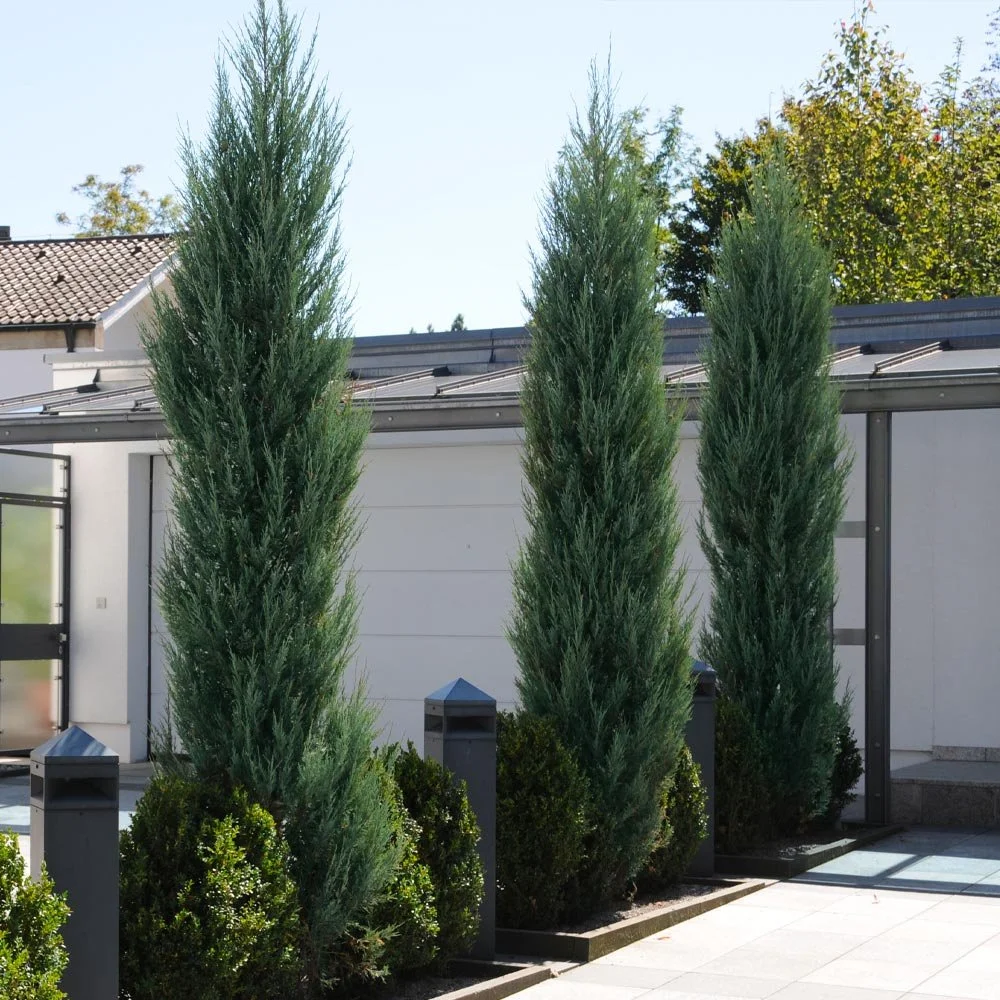
Depending on the variety, junipers can provide evergreen screening in a range of landscape settings. Some grow as spreading shrubs, while others develop into narrow upright forms.
Upright junipers can be useful where horizontal space is limited, although the specific cultivar matters. Choose a variety with a suitable mature width and height rather than assuming all junipers remain narrow.
Junipers are often useful in low-water landscape designs once established, but young plants still need appropriate irrigation while their roots develop.
Deciduous Trees for Seasonal Privacy and Shade
Evergreen trees are not the only option for creating privacy. Deciduous trees can provide attractive seasonal screening, shade during warmer months, and a more open landscape during winter.
5. Hackberry
Hackberry is a hardy deciduous tree that can be useful in many Front Range landscapes. It provides a broad canopy and can help create shade and visual separation.
Hackberry is not an evergreen privacy screen, so it is best suited to designs where summer shade and partial seasonal screening are more important than complete year-round coverage.
6. Bur Oak
Bur oak is a large, long-lived shade tree that can work well on properties with enough room for its mature canopy. Its substantial form can add character and structure to a landscape.
Because bur oak becomes large, it generally works better in spacious yards than in narrow side yards or close to patios and foundations. It is primarily a shade and landscape tree rather than a tight privacy-screening solution.
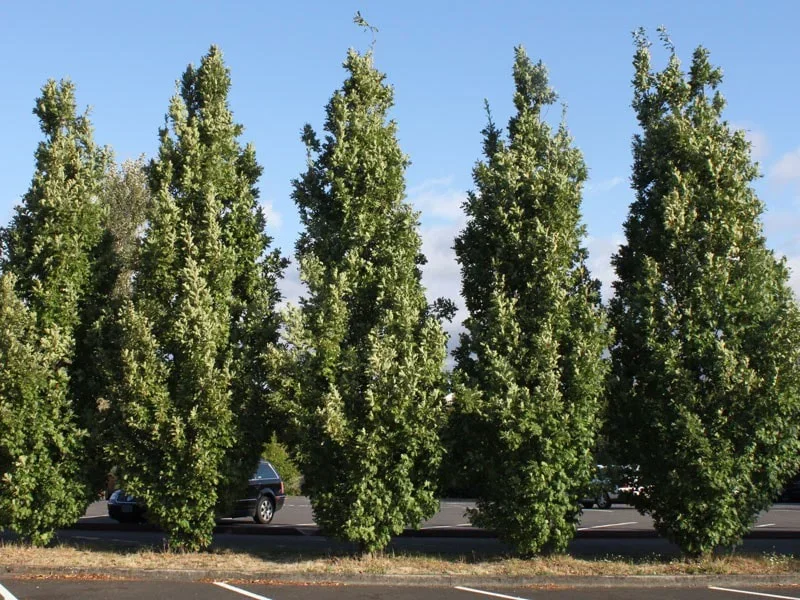
7. Columnar Deciduous Trees
Certain columnar tree varieties can provide vertical structure in narrow spaces. Depending on the species and cultivar, they may help screen a specific view without occupying as much horizontal space as a broad-canopied tree.
Selection is important. Some columnar trees require more maintenance or are more susceptible to local pests and diseases than others. Evaluate the exact cultivar before planting.
Privacy Trees vs. Privacy Shrubs
Trees provide height, but shrubs can fill gaps near the ground and create a fuller screen. A layered planting plan often delivers better results than planting a single row of trees.
For example, a backyard privacy design might include:
Evergreen trees for year-round height.
Medium-sized shrubs to fill the middle layer.
Ornamental grasses for texture and movement.
Perennials to add seasonal color.
Mulch or decorative rock to create a clean, finished appearance.
The result is a more natural-looking landscape that feels intentional rather than like a row of trees placed along a fence.
How to Design a Privacy Screen for a Colorado Backyard
Consider the views you actually want to block
Before choosing plants, identify the windows, decks, roads, or neighboring outdoor areas you want to screen. You may not need to block the entire property line.
Focusing on the most important sightlines can reduce planting costs and preserve open views elsewhere in the yard.
Plan for mature tree size
A common landscaping mistake is planting trees too close together or too close to fences and buildings. Trees that look appropriately spaced at installation may become crowded as they mature.
Check the expected height and width of each species, along with clearance requirements for sidewalks, utilities, and structures.
Account for Colorado's soil and water conditions
Northern Colorado properties can have compacted soil, variable drainage, and alkaline conditions. Trees also face dry periods, strong winds, and rapid temperature changes.
A successful planting plan should account for these conditions instead of relying solely on a tree's appearance at the nursery.
Use irrigation appropriately
New trees require consistent watering while they establish. Their irrigation needs depend on species, weather, soil, root-ball size, and planting conditions.
An efficient irrigation system can help deliver water where it is needed. Avoid assuming that drought-tolerant trees require no water immediately after planting.
Combine privacy with outdoor living
Privacy trees are particularly effective when integrated into a larger backyard design. Trees can screen an outdoor kitchen, soften the edge of a paver patio, frame a fire pit, or create separation around a swimming pool.
The best landscape plans consider how the space will be used, not just how the property looks from the street.
Common Privacy Landscaping Mistakes to Avoid
Homeowners should avoid selecting trees based only on their height at purchase, planting trees too close to property boundaries, ignoring mature widths, or assuming every evergreen is suitable for Colorado.
Other common mistakes include overlooking underground utilities, placing trees where they will obstruct important views, and failing to plan for irrigation during establishment.
Before planting near property lines, utilities, fences, or structures, verify relevant requirements and clearances.
Create a More Private Backyard With Professional Landscape Design
The right privacy trees can make a Northern Colorado backyard feel more comfortable, attractive, and functional. By combining appropriate evergreen trees, deciduous shade trees, shrubs, and complementary landscape features, homeowners can create privacy without sacrificing the appearance of their outdoor space.
Premier Custom Landscapes helps homeowners plan complete outdoor environments, from landscape design and planting to paver patios, custom pools, and outdoor living spaces.
If you're ready to improve the privacy and functionality of your property, contact Premier Custom Landscapes to discuss a landscape design tailored to your home.
Ready to transform your backyard? Visit Premier Custom Landscapes to learn more about our landscaping and outdoor living services in Northern Colorado.